Buying Guide: Cordless Power Washers
Cordless power washers draw water from a bucket, bottle, or hose and run on a rechargeable battery, so you can clean a car, patio, bike, or garden furniture without hunting for an outdoor socket. They trade some raw pressure for freedom of movement, which makes them a practical choice for smaller jobs and spots far from mains power.
This guide explains how the products on our list were selected from customer ratings, walks through the factors that matter when comparing models, and breaks down what different price levels typically include. It is meant to help you shortlist a cordless pressure washer that suits your space, your water supply, and the jobs you actually plan to do.
How we chose
Our list is built from an analysis of customer star ratings and the number of ratings each product has received. We did not test any of these machines hands-on, so nothing here is based on our own measurements, cleaning trials, or use over time. Instead, we looked at how buyers collectively rated each model and how many people took the time to rate it, which gives a rough sense of consistency and popularity.
A high average from a small number of ratings carries less weight than a slightly lower average from a much larger pool, so volume matters alongside score. We also considered whether a product had enough ratings to be judged at all. Products with very few ratings are treated cautiously, and we avoid drawing conclusions from a single glowing or negative review. The result is a shortlist of options that appear to have satisfied a meaningful number of buyers, not a ranking of raw cleaning power.
Key things to consider when buying
Pressure and flow rate. PSI tells you the force of the water and flow rate tells you how much water moves through the nozzle per minute, and the two together shape cleaning performance. Very high PSI numbers on a cordless model are often measured at the nozzle under ideal conditions, so treat them as a rough guide rather than a guarantee. For car washing, bikes, and light patio cleaning, a moderate PSI with a steady flow is usually more useful than a big number that drains the battery quickly.
Water supply and suction. Many models can draw from a bucket, bottle, or water butt as well as a tap, which is the main reason people choose a portable power washer. Check what the included hose and filter allow, and how deep a container the machine can draw from. If you plan to use it away from a tap, a model with a reliable suction filter and a long enough pickup hose will save you a lot of frustration.
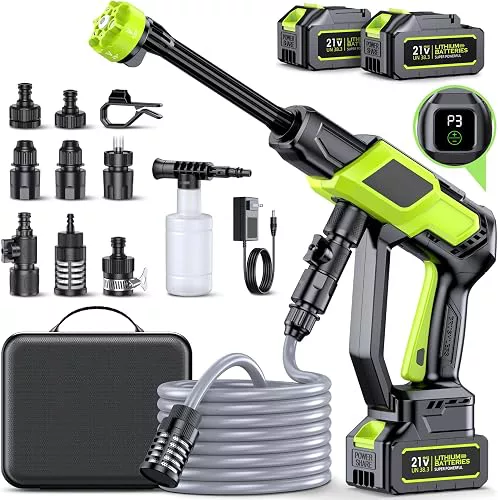
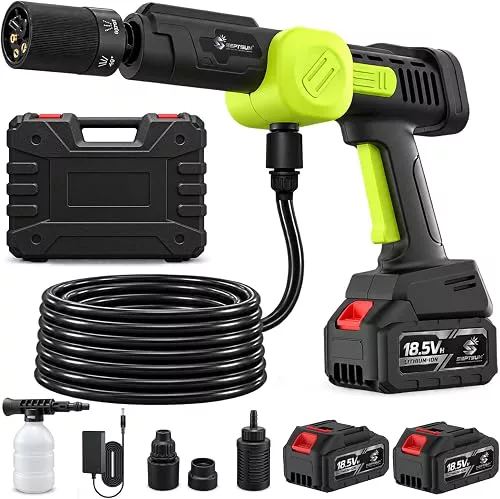
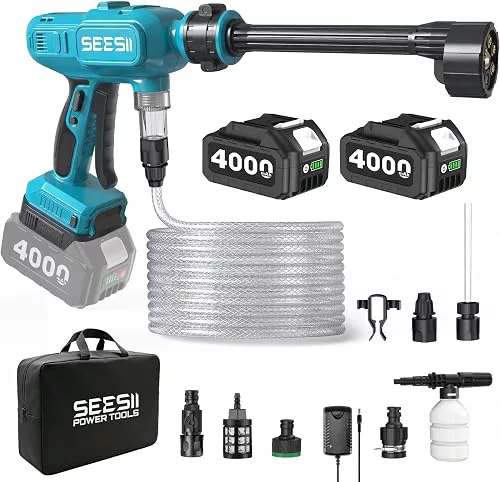
Battery, runtime, and charging. Battery capacity and voltage determine how long you can clean before recharging, and runtime claims are usually measured under light load. Consider whether the battery is shared with other tools from the same brand, how long a full charge takes, and whether a spare battery is available. A battery operated power washer with two batteries is often more practical than one with a larger single pack, because you can keep working while the other charges.
Build, weight, and portability. These machines are meant to be carried, so weight with the battery fitted and the balance of the handle matter more than they do on a wheeled mains unit. Look at whether the body has a carry handle, how the lance and nozzle store, and whether the connections feel robust. A cordless jet washer that is awkward to lift will stay in the shed, however good its ratings.
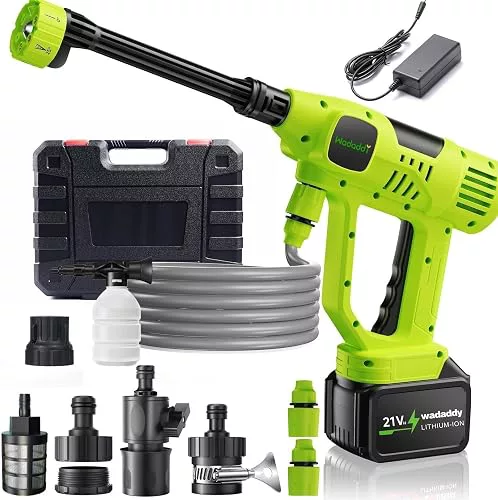
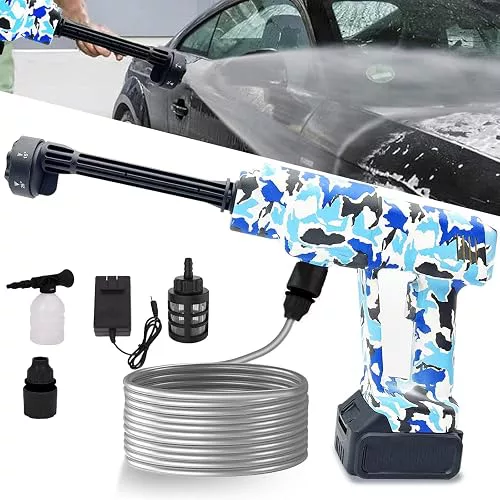
Nozzles, accessories, and display features. Adjustable nozzles, foam cannons, and brush attachments change what a machine can do, and some models include an LCD display showing battery level or pressure mode. Decide which extras you will genuinely use, since bundled accessories add cost. For a cordless car washer, a foam attachment and a soft brush are often more valuable than a very narrow high-pressure tip.
Price tiers and what you get
Budget models usually cover the basics: a single battery, a short hose, one or two nozzle options, and modest pressure. They suit light duties such as rinsing a bike, watering plants, or cleaning garden furniture, and they are a reasonable entry point if you are unsure how often you will use one. Expect simpler fittings and shorter runtime, and check that replacement batteries are available before you buy.
Mid-range options tend to add a second battery or a larger pack, better suction fittings for drawing from a container, and a wider set of nozzles or a foam bottle. This is where a portable cordless pressure washer often becomes genuinely useful around the home and car, with enough runtime to finish a job without recharging. Build quality and connection fittings usually improve too, which matters if the machine will be used regularly.
Premium models focus on higher pressure, longer runtime, sturdier housings, and more thoughtful accessories such as quick-connect fittings and storage for the lance. They may include digital displays or selectable pressure modes. The extra cost buys convenience and durability more than a dramatic jump in cleaning power, so it is worth deciding whether those details matter for how you plan to use a cordless electric pressure washer.
Practical tips
- Use a pre-filter or mesh screen on the suction hose when drawing from a bucket or water butt, and rinse it after each use.
- Keep the battery out of direct sun and store it partially charged rather than fully drained or full for long periods.
- Work from the top down and keep the nozzle moving to avoid streaking paint or damaging soft surfaces.
- Test on an inconspicuous area first, especially on car paint, wooden decking, and weathered masonry.
- Drain and coil the hose properly after use to prevent kinks and stale water sitting in the line.
- Check that replacement batteries and nozzles are easy to find before committing to a model.
Frequently Asked Questions
Which cordless pressure washer is the best?
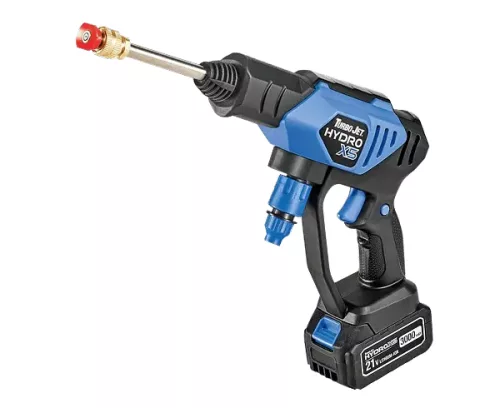
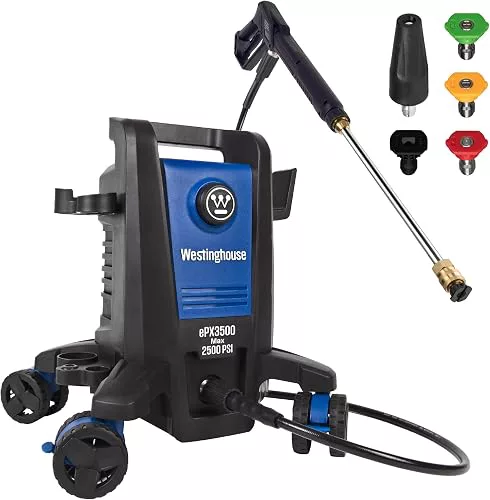
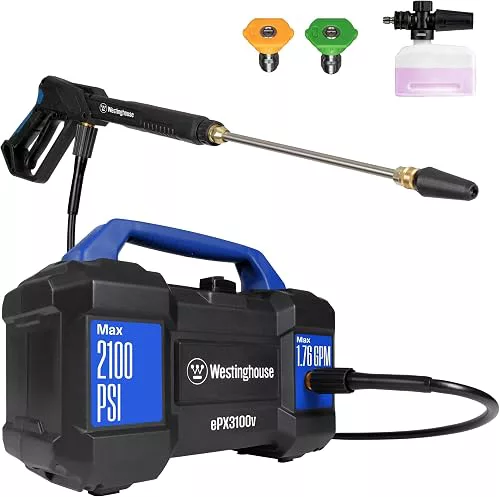
There is no single answer, because the right model depends on your water supply, battery preference, and the jobs you have in mind. Our list is based on customer ratings and rating volume rather than hands-on testing, so use it to shortlist options and then compare the specifications that matter to you. Models such as the Hydro X5 and the Westinghouse ePX series appear on the list for that reason.
What is the best cordless pressure washer for home use?
For most homes, a mid-range model with a second battery, a foam attachment, and the ability to draw from a bucket is the most flexible choice. That setup handles car washing, bikes, patio furniture, and light paving without needing a tap nearby. If you mostly clean one car and a few small items, a simpler budget unit may be enough.
Are the cordless power washers any good?
They are good for light and medium jobs where portability matters more than raw power, such as car washing, garden furniture, and bikes. They will not match a mains-powered pressure washer on heavy paving or long driveways, and runtime is limited by the battery. Buyers who understand that trade-off tend to rate them well.
What is a good PSI for a cordless pressure washer?
For car washing and general outdoor cleaning, a moderate PSI in the low hundreds is usually sufficient, especially when paired with a steady flow rate. Higher quoted figures can be useful for tougher surfaces but often shorten runtime. Treat PSI as one indicator among several rather than the deciding factor.
Can a battery powered pressure washer draw water from a bucket?
Many can, provided the suction hose and filter are set up correctly and the container is deep enough. Check the manufacturer's stated suction height and keep the filter clean, since debris will quickly reduce flow. This feature is what makes a battery operated power washer useful away from an outdoor tap.